
NXP TJA1050T/C: A High-Speed CAN Transceiver for Automotive Network Applications
The evolution of modern vehicles into complex, software-defined machines is underpinned by robust and reliable in-vehicle networking. At the heart of this communication lies the Controller Area Network (CAN) bus, an industry standard for real-time data exchange between electronic control units (ECUs). The NXP TJA1050T/C stands as a pivotal component in this ecosystem, serving as a high-speed CAN transceiver that forms the critical interface between a microcontroller's protocol controller and the physical CAN bus lines.
This transceiver is engineered to meet the stringent requirements of the automotive environment. It is fully compliant with the ISO 11898-2 standard, ensuring interoperability with other CAN devices in the network. A key feature of the TJA1050T/C is its exceptional electromagnetic compatibility (EMC) and electrostatic discharge (ESD) protection performance. This robustness is non-negotiable in the electrically noisy environment of an automobile, where reliability and data integrity are paramount for safety-critical applications like engine management, braking systems, and airbag control.
The device offers a data rate of up to 1 Mbaud, supporting the high-speed communication necessary for time-sensitive functions. Its differential transmit and receive capability ensures superior noise immunity, allowing for stable communication over twisted-pair bus lines. Furthermore, the TJA1050T/C includes advanced failure management features. It provides excellent passive behavior in the event of a bus failure, such as a short-circuit or a broken wire. When such faults are detected, the transceiver enters a fail-safe mode, pulling the bus lines to a level that results in a logical dominant state, which helps the network management system identify and handle the error gracefully.
Designed for low power consumption, the chip includes a standby mode with remote wake-up functionality. This feature is crucial for modern vehicles that implement various power-saving states, allowing ECUs to sleep when not needed and be woken up by a specific bus signal, thereby reducing the overall quiescent current and extending battery life.
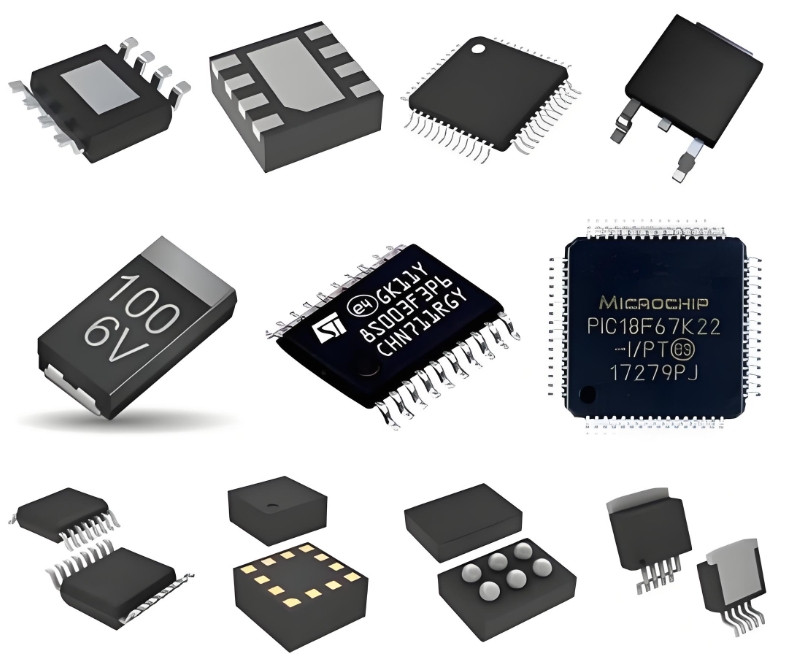
In application, the TJA1050T/C is typically used between a CAN protocol controller (integrated into a microcontroller) and the physical CAN bus. It converts the digital data streams from the controller into differential signals for transmission onto the bus and translates received differential signals back into digital data for the controller. Its small SO8 package makes it suitable for space-constrained PCB designs common in automotive modules.
ICGOODFIND: The NXP TJA1050T/C is an industry-proven workhorse that provides a robust, reliable, and high-performance physical layer solution for high-speed CAN networks. Its combination of compliance with international standards, superior protection features, and low-power operation makes it an indispensable component for building resilient and efficient automotive communication architectures.
Keywords: CAN Transceiver, Automotive Networking, ISO 11898-2, EMC Performance, Fail-Safe Operation.

